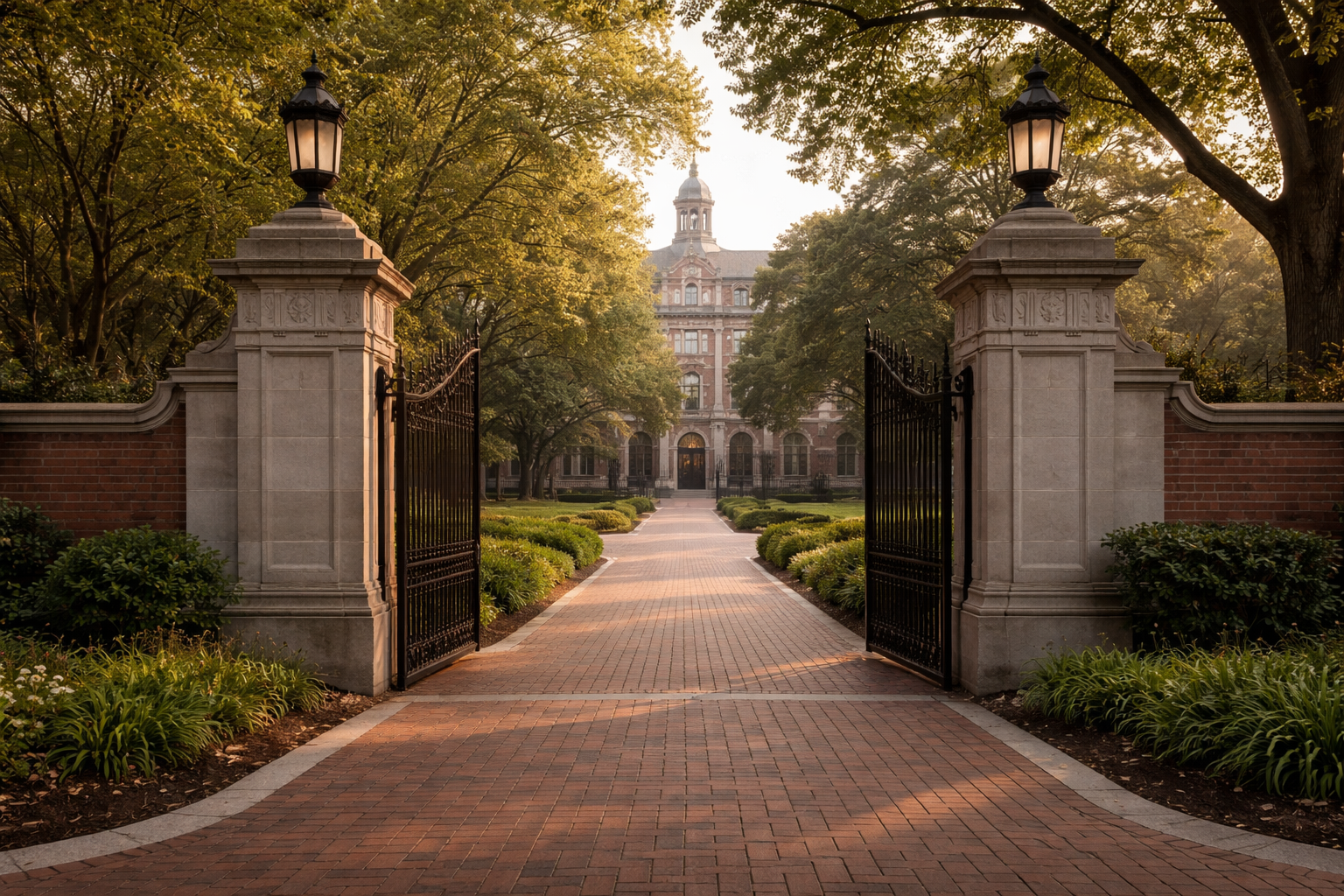
A university's relationship with its surrounding neighborhood is one of the most complex institutional relationships in American civic life. Universities generate enormous economic activity, shape the character of entire districts, and attract populations that transform local housing markets.
Graduate housing sits at the center of this complexity. It is not a peripheral concern. It is a direct expression of how a university relates to its surrounding community. Scholar's Row enters this environment not as a developer looking for a transaction but as a partner looking for alignment.
What university partnership actually requires
Genuine partnership with a university begins long before a shovel enters the ground. It begins with a serious effort to understand the institution — its graduate enrollment trends, its housing priorities, its relationship with surrounding neighborhoods, its governance structure, and the specific needs of the students and faculty it is trying to house.
Scholar's Row begins every potential university partnership with this kind of listening. The questions that matter are not generic. They are specific: What programs are growing? Where do graduate students currently live, and why? What are the frictions in the current housing experience that most affect academic performance and retention? What does the university's relationship with the surrounding neighborhood look like, and what constraints does that relationship create for new development? The answers to these questions shape everything that follows — from site selection to building program to the operational protocols that govern the community after opening.
Navigating institutional complexity
Universities are complex organizations. Housing decisions involve multiple stakeholders — housing offices, graduate student affairs, academic departments, facilities management, legal counsel, and often senior leadership. Decision-making processes are deliberate. Timelines are long.
The appetite for risk is limited. Scholar's Row is structured for this environment. The company's boutique model — working on a small number of carefully selected projects — means that the principals have the time and attention required to build relationships with institutional stakeholders over the months and years that a genuine university partnership requires. There is no pressure to force a timeline.
There is no incentive to oversell and under deliver. This patience reflects a genuine belief that housing built in alignment with institutional priorities performs better — for residents, for universities, and for investors — than housing developed without that alignment.
What Scholar's Row brings to the partnership
Universities that partner with Scholar's Row are not simply engaging a developer to build buildings near campus. They are engaging a long-term institutional partner with a specific set of commitments. Scholar's Row commits to building housing that fits the academic district — architecturally, at the right scale, with materials and proportions that respect the context the university has spent generations creating.
It commits to operating that housing to standards that reflect the university's values — quiet, well-maintained, professionally managed, and attentive to the specific rhythms of academic life. And it commits to maintaining the institutional relationship over the full life of the building. In return, Scholar's Row asks for genuine collaboration — sharing enrollment data, communicating housing priorities, flagging neighborhood concerns early, and treating Scholar's Row as a partner rather than a vendor.
The alignment between university and investor interests
One of the under appreciated aspects of university-aligned development is the degree to which institutional partnership and investor interests reinforce each other. A building developed with genuine university alignment occupies a different market position than one developed without it.
It benefits from the credibility of the institutional relationship. It draws residents who are enrolled in stable, well-funded programs at major research universities. It operates in a neighborhood where the university has a long-term interest in maintaining quality and stability.
Investors in Scholar's Row projects are not simply underwriting a real estate asset. They are under writing a relationship — between Scholar's Row, the university, and the academic community the building serves. That relationship is a source of competitive advantage, and it is built through exactly the kind of patient, alignment-oriented collaboration described here.
University partnership, in the end, is not a component of the Scholar's Row model. It is the foundation of it.
.jpg)
More from our team
Explore recent perspectives on housing and university partnerships


Ready to explore further
Connect with our team to discuss opportunities and partnerships.