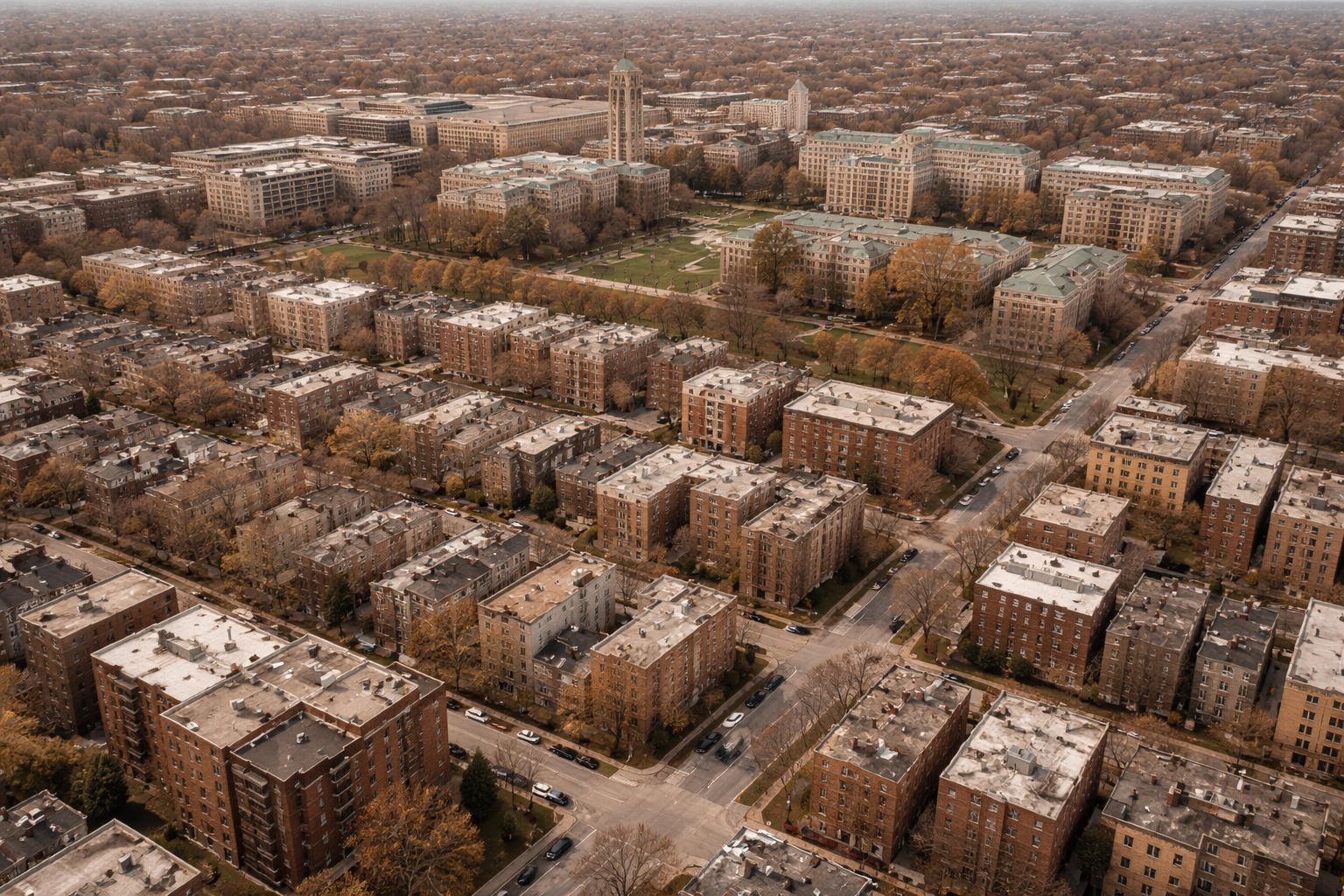
Most residential real estate is subject to the same fundamental risk: when economic conditions shift, residentsmove, delay household formation, or trade down. Demand is elastic. The connection between a renter and a specific location is loose — driven by preference,proximity to work, and price sensitivity, all of which respond to broader market conditions.
Graduate academic housing near major research universities operates under a different set of rules. The demandis not elastic in the conventional sense. It is institutional — anchored to enrollment decisions made by universities on multi-year timelines, driven by research priorities and program funding rather than by job market conditions or consumer sentiment.
Understanding why this matters requires understanding what makes graduate housing structurally different fromevery other residential category.
The demand anchor
A graduate student enrolled ina five-year doctoral program at a major research university needs housing near that university for the duration of the program. That need does not respond torising rents by relocating to a cheaper market. It does not respond to a recession by delaying the tenancy. The student is enrolled, funded, and working— and the institution they are attached to is not going anywhere.
This creates a demand profilethat is fundamentally different from conventional multifamily. The resident base is stable, predictable, and anchored to an institution whose own stability is essentially independent of economic cycles. Major research universities —particularly those with strong medical schools, law schools, and science programs — have weathered every economic disruption of the past century without meaningful enrollment contraction.
The replacement demand is similarly reliable. Graduate programs enroll new cohorts on an annual basis.When a resident completes their program and moves on, another qualified resident is already in the pipeline. The institution continuously regenerates the demand that fills the building.
The supply constraint
Durable demand is a necessary condition for investment-grade performance, but it is not sufficient on its own. The other half of the structural argument is supply — and in most major university markets, supply constraint is not a temporary condition. It is a permanent feature of the landscape.
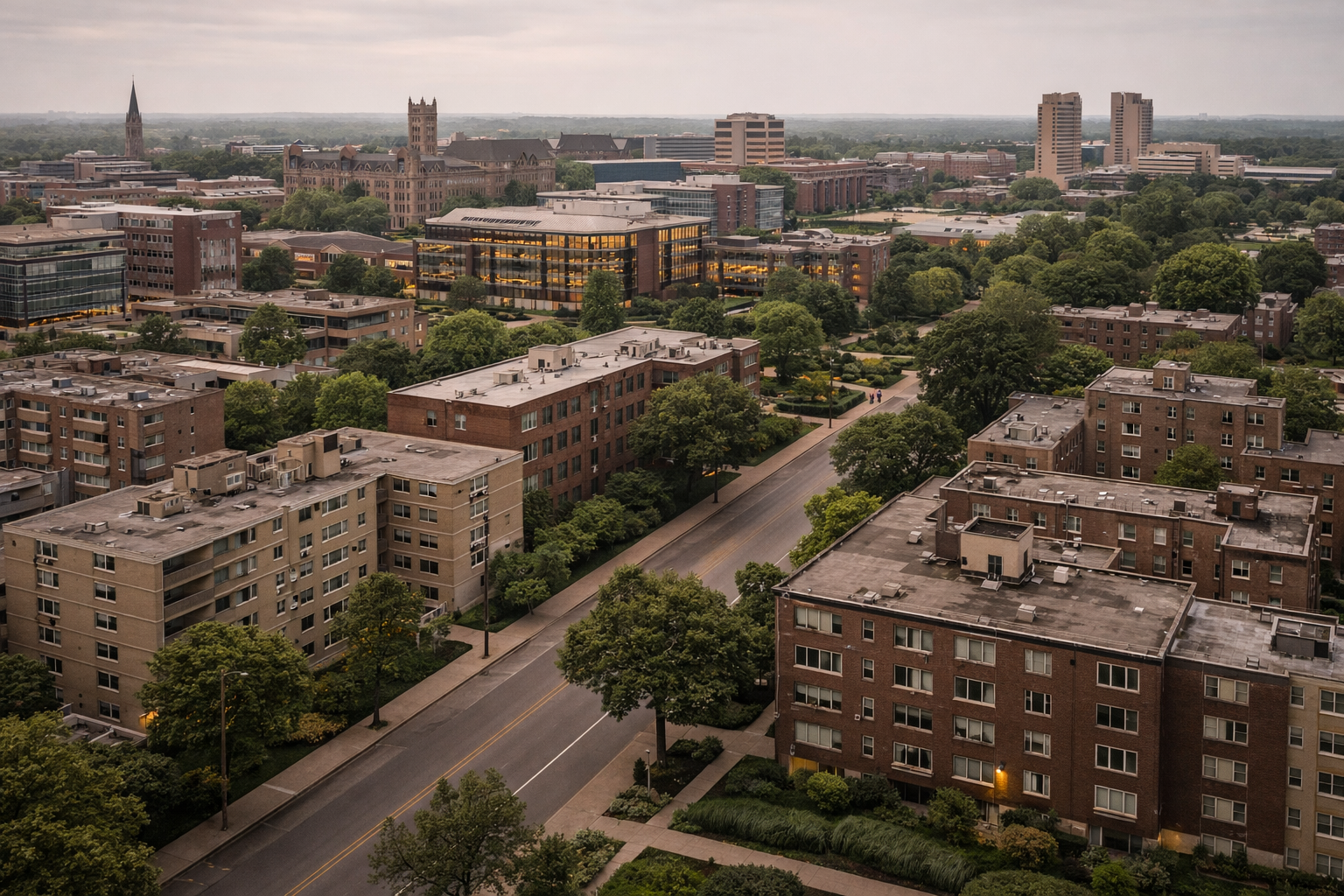
Urban academic districts are among the most constrained development environments in American real estate.Sites within true walking distance of major research campuses are scarce by definition — there is a finite amount of land within a ten-minute walk of anygiven institution. What exists is largely built out, often occupied by the university itself or by established residential neighborhoods with strong preservation interests.
Developing new supply in these environmentsis genuinely difficult. Entitlement processes are complex. Community opposition to density is common. The scale of development that makes economic sense for large operators does not fit the constrained sites available in walkable academic districts. And the boutique-scale operators capable of working on these sites are few.
The result is a structural imbalance between demand and supply that has persisted for decades and shows nosigns of resolving. In market after market — Boston, Berkeley, Baltimore,Evanston — the graduate housing shortage is not a recent development. It is along-standing condition that new development has consistently failed to address at scale.
The performance implications
For investors, the combination of institutional demand and structural supply constraint produces a performance profile that is meaningfully different from conventional multifamily.
Occupancy in well-located graduate housing tends to be high and stable. The resident base is notsensitive to the lifestyle amenity competition that drives concessions in luxury multifamily markets. Graduate students and visiting faculty are not choosing between Scholar's Row and a competing building with a better rooftop pool. They are choosing the best available option within walking distance oftheir institution — and in supply-constrained markets, that choice set islimited.
Turnover is predictable and manageable. It is driven by program completion rather than by dissatisfaction or market conditions. This predictability allows for operational planning and capital allocation that would not be possible in a building with unpredictablele ase-break patterns.
Rent growth in supply-constrained academic markets tends to track institutional growth —which, over the past several decades, has been consistent and sustained. As universities expand their graduate programs, as research funding increases, andas competition for top academic talent intensifies, the pressure on existing housing supply increases. A building that is well-positioned relative to agrowing institution in a supply-constrained market has a structural tail wind that most residential assets do not.
The risk profile
Every investment thesisrequires an honest accounting of risk. Graduate housing is not without it.
Concentration risk is real. A building anchored to a single institution is exposed to that institution'shealth — its enrollment decisions, its funding environment, its long-termtrajectory. Scholar's Row manages this by targeting institutions with demonstrated stability and strong graduate program fundamentals — major research universities with diversified funding, strong endowments, andmulti-decade enrollment growth.
Development risk in constrained urban markets is also real. Entitlement timelines are long, community processesare complex, and construction costs in urban academic districts are elevated. Scholar's Row manages this through disciplined under writing, conservative proform a assumptions, and a site selection process that prioritizes locations with clear development pathways over those with speculative entitlement potential.
Liquidity risk exists as withany real estate investment. These are long-duration assets held by a long-term owner-operator. Scholar's Row is transparent about this — the investment thesisis not built around a near-term exit. It is built around sustained performance over a full investment horizon.
Why the asset class is underserved
If graduate housing near major research universities has these structural characteristics, why has institutional capital not already solved the shortage?
The answer is scale. The boutique nature of the opportunity — constrained sites, small building footprints,complex entitlement environments, institutional relationships that require patient cultivation — does not fit the deployment model of large institutional real estate platforms. The minimum check sizes, the team structures, and thereturn expectations of major capital allocators are not designed for 25-unit buildings on constrained urban in fill sites.
This creates an opportunity for a specialized operator — one built specifically for this niche, with the development discipline, the institutional relationships, and the operationalinfrastructure to execute at boutique scale across multiple markets over time.
That is what Scholar's Row is building. The asset class is structurally sound. The opportunity is real. And the operator capable of accessing it consistently, at quality, across multipleuniversity markets is exactly what has been missing.
.jpg)
More from our team
Explore recent perspectives on housing and university partnerships



Ready to explore further
Connect with our team to discuss opportunities and partnerships.